top of page
Image by Landon Parenteau

Latest News

Photo of Dylan Wilson

There is something special about watching someone find their place in environmental education. For Dylan Wilson, that journey has taken him deep underground, literally.


Dylan joined the Hidden River Cave team in 2022 and has spent the years since growing as an environmental educator, cave guide, and advocate for Kentucky’s unique karst landscape. His dedication to helping others connect with the environment has earned him this year’s Rising Star Award.


Although Dylan is still early in his career, he has already made a meaningful impact.


Dylan giving a tour in Hidden River Cave

In 2024, Dylan became a certified Professional Environmental Educator through the Kentucky Environmental Education Council's PEEC program. In 2025, he reached more than 2,000 people through environmental education programs at Hidden River Cave. Through these programs, students, visitors, and educators have had the opportunity to learn about caves, groundwater, geology, and the incredible ecosystems found beneath the surface.


For Dylan, environmental education is about more than simply sharing information. It is about helping people become curious about the places around them.


People crawling in Hidden River Cave for a tour

That approach is especially important at Hidden River Cave, where the landscape offers countless opportunities to spark that curiosity. Kentucky’s karst environment can be easy to overlook from the surface, but underground, the connections between geology, water, wildlife, and people become much easier to see. Dylan has a talent for making those connections understandable and memorable.


His work has also grown beyond the programs he leads for visitors. As demand for environmental education continues to increase, Dylan is helping prepare other Hidden River Cave staff members to bring these programs to even more people. He is also continuing to develop new programs and strengthen the experiences already offered.
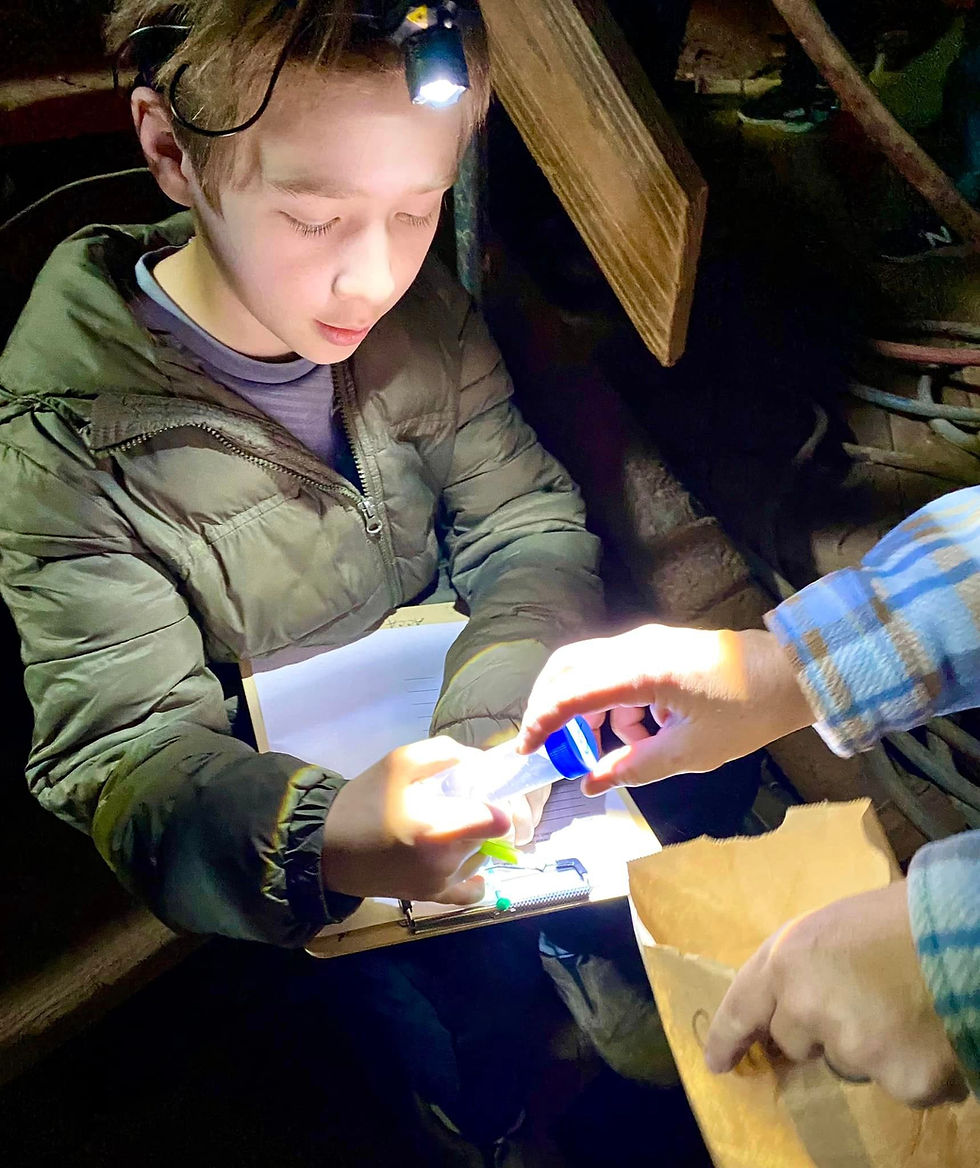

Dylan has become part of the larger environmental education community as well. He contributes

to the American Cave Conservation Association’s seasonal publication, sharing ideas and perspectives about cave conservation and environmental education. His work reflects an important question for anyone who cares about the future of these special places: How do we inspire people to protect something they may never have had the chance to experience?


His journey with Hidden River Cave began just a few years ago, but his work has already reached thousands of people and continues to grow. As he takes on new programs, helps train other educators, and finds new ways to share the importance of caves and karst, we are excited to see where his path leads.


Congratulations to Dylan Wilson, our 2026 Rising Star Award recipient! KAEE is proud to celebrate the energy, creativity, and commitment he brings to environmental education, and we can't wait to honor him at the 2026 KAEE Conference in Lexington, Kentucky. The 2026 Excellence in Environmental Education Awards will be presented during the awards dinner on Thursday, November 12, at the Embassy Suites by Hilton Lexington/UK Coldstream.


This summer, KAEE had the chance to launch something new, our Workforce Development

Internship Program, a paid internship opportunity connecting students and recent graduates with hands-on experience in environmental and natural resource-related careers.


The goal of the program is pretty simple. Students get the chance to gain real-world experience, learn new skills, and explore what a career in natural resources can look like, while host organizations get an extra set of hands and the opportunity to mentor someone who is just getting started in the field.


This summer, interns worked with organizations across Kentucky in a variety of settings. From urban forests and nature centers to organic farms and wildlife sanctuaries, each internship looked a little different depending on the host site.


We’re grateful to the organizations that opened their doors and helped make these experiences

Julian Bagley holds a box turtle as part of a research study on box turtle populations.

possible. This summer’s host organizations included:


  • Wolf Gap Gardens

  • Bluegrass Greensource

  • Homegrown Hideaways

  • TreesLexington

  • Louisville Nature Center

  • Creasey Mahan Nature Preserve

  • Seedleaf

  • Pine Mountain Settlement School

  • Lexington Parks


Each organization provided students with a unique opportunity to gain hands-on experience and learn more about careers in environmental and natural resource fields.


We had the opportunity to hear from several of our interns and host sites about their experiences this summer. While these are just a few of the interns who participated in the program, their stories give a great look at the different types of experiences and opportunities the program can provide.


Getting Hands-On Experience


Lauren Bunch interns with Trees Lexington.

At Trees Lexington, Lauren Bunch spent the summer learning about urban forestry and tree care.


Lauren helped assess the health of trees at planting sites around Lexington, worked with volunteers to mulch and water trees, and took on an independent project growing bare-root saplings for upcoming planting projects. Lauren also had the opportunity to help with Tree Stewards programming and summer camp activities.


Lauren’s experience is a great example of how an internship can give students the chance to learn both the hands-on side of the work and the community side of natural resource careers.


At Wolf Gap Gardens, Caitlin and Susan got a little bit of everything. Their summer included

seeding, transplanting, weeding, harvesting, helping at the Richmond Farmers Market, and working on invasive species removal in the surrounding woodlands. They also learned more about tree identification and sustainable organic growing practices.


For Caitlin, one of the favorite parts of the internship was getting involved in the local community through the farmers market and seeing the connection between the work at the garden and the people it serves.


  • Caitlin and Melinda Wilder doing invasive work
  • Susan using a broad fork to help till the beds
  • Lauren Bunch interns with Trees Lexington.

Learning the Work Behind Conservation


Julian Bagley with her supervisor at Louisville Nature Center

At the Louisville Nature Center, Julian Bagley spent much of the summer working on one of the less glamorous, but very important, parts of conservation, invasive species removal.


Julian worked to remove Amur honeysuckle and treat Japanese stiltgrass, including helping clear multiple acres along one of the nature center’s trails. The work has helped create more space for native plants to grow and support the larger ecosystem.


Image captured by Julian at her internship

But Julian also found that some of the most interesting parts of the internship happened while doing that day-to-day work. Being close to the ground gave Julian the opportunity to learn more about the plants and animals around the nature center, including species that Julian had never paid much attention to before.


As Julian put it, “Our appreciation of the world is in large part determined by what we pay attention to and how we pay attention to it.”


At Buckley Wildlife Sanctuary, Eli Starnes got to experience both land management and community outreach. Eli’s summer included maintaining trails

and facilities, helping with forest restoration projects, preparing for a prescribed burn, working with volunteers, and participating in educational events and nature hikes.


Along the way, Eli learned how to operate a tractor and UTV, prepare for prescribed burns, identify invasive plants and local species, and coordinate projects with others. Eli also spent part of the internship working alongside a Forestry Engineering student from Brazil, which gave Eli the chance to compare experiences and learn about conservation from a different perspective.


More Than Just a Summer Job


One of the biggest things we hoped to accomplish with this program was to give students more than something to put on a resume. We wanted them to have the chance to actually do the work, ask questions, learn from professionals, and figure out what parts of the field interest them.

The host sites benefited, too.


The organizations that welcomed interns this summer were able to get help with projects that can be difficult to keep up with while also giving students the opportunity to learn. At Trees Lexington, Lauren helped with fieldwork and volunteer watering efforts. At Wolf Gap Gardens, Caitlin and Susan became an important part of the small farm’s summer workforce. At Louisville Nature Center and Buckley Wildlife Sanctuary, interns contributed to ongoing conservation and land management projects.


These experiences also show just how many different directions a career in natural resources can take. Forestry and environmental work isn't just one job. It can mean managing an urban tree canopy, growing food, restoring forests, removing invasive species, working with volunteers, educating the public, or caring for wildlife and natural areas.


Looking Ahead


We’re excited about what this first summer of the Workforce Development Internship Program has shown us, and even more excited about where it can go from here.


A big part of building the next generation of environmental and natural resource professionals is making sure students have opportunities to see what these careers actually look like. Sometimes that means learning how to drive a tractor. Sometimes it means spending the morning removing honeysuckle. Sometimes it means assessing trees across a city or helping harvest vegetables for a local farmers market.


Whatever the experience looks like, these hands-on opportunities can help students build skills, confidence, and connections that they can carry with them into their careers.


We’re grateful to all of the host organizations that opened their doors to interns this summer and to all of the students who jumped in, learned new skills, and got their hands dirty along the way.

We’re excited to keep growing this program and creating more opportunities for students and recent graduates to find their place in the environmental and natural resource fields.


KAEE’s Workforce Development Internship Program is offered in partnership with host organizations across Kentucky, with funding provided by the U.S. Department of Agriculture, Forest Service.


Archive

KENTUCKY ASSOCIATION FOR ENVIRONMENTAL EDUCATION

Serving and connecting educators since 1976

  • Instagram
  • Facebook
  • Twitter
  • LinkedIn

Sign Up for KAEE News, Events, and More!

Quick Links

Green Schools

eeCredentials

Conference

News

Calendar

Contact

© 2026 Kentucky Association for Environmental Education

bottom of page